
If you’re figuring out how to prepare for a frenectomy — for yourself or your child — here’s what actually matters: the surgery itself is the easy part. A tongue tie — ankyloglossia, if you want the clinical term — happens when the tissue under the tongue is tighter than it should be, limiting how the tongue moves. That limitation can quietly affect feeding, speech, sleep, breathing, and jaw development, in kids and in adults.
A frenectomy fixes the tissue. It does not, on its own, fix the years of compensation patterns your tongue, jaw, and airway built around that restriction. That’s the part most people don’t hear until after surgery — and it’s the part that actually determines whether the release sticks.
Here’s exactly how to prepare for a frenectomy, what to expect on the other side, and what most guides leave out.
What is a tongue tie release?
Tongue tie vs. normal tongue pictures
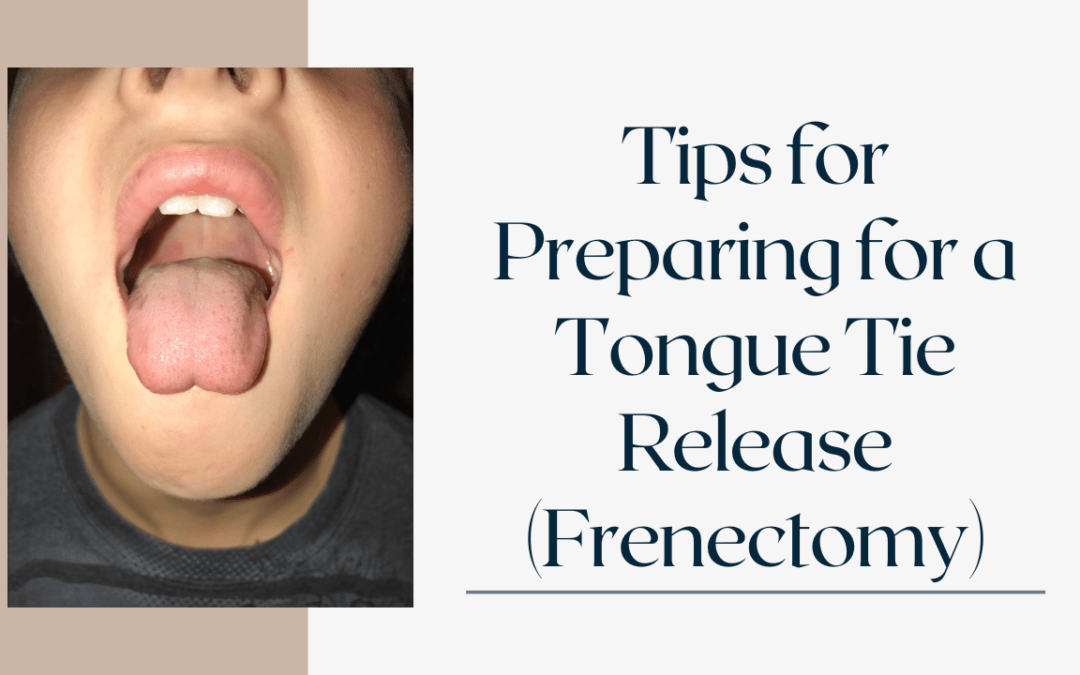
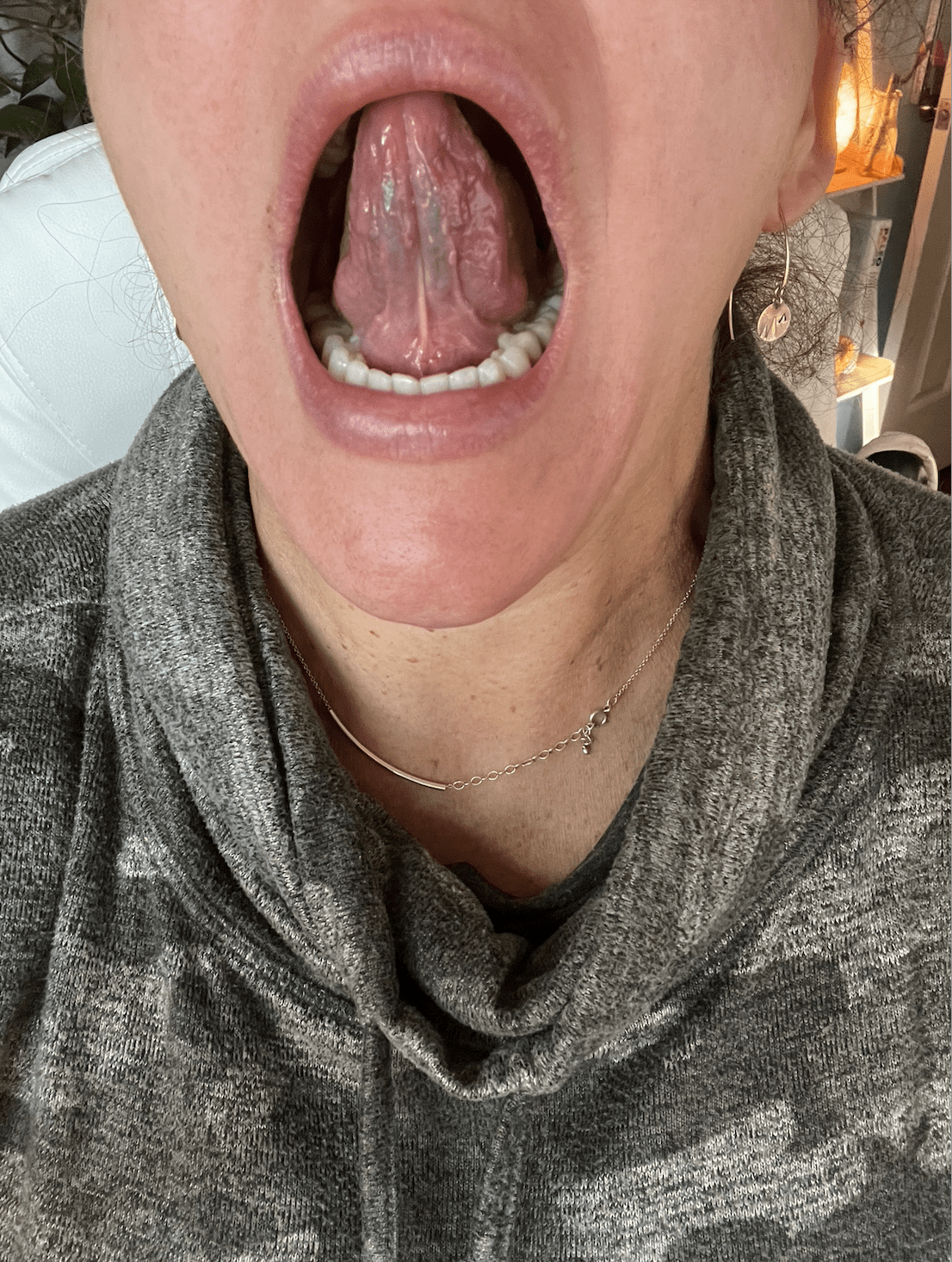
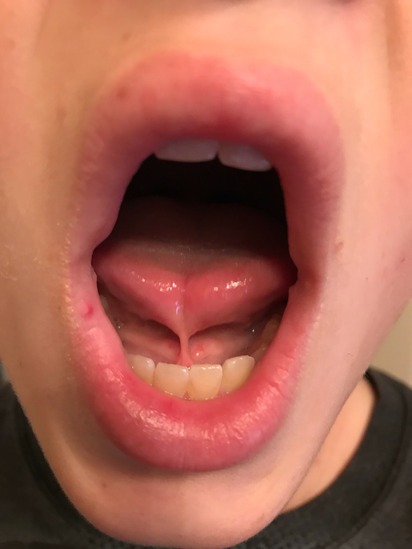
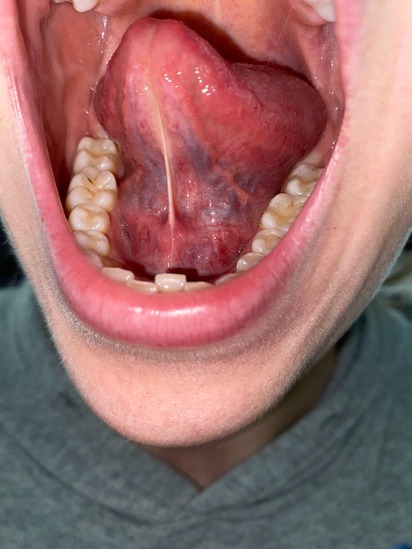
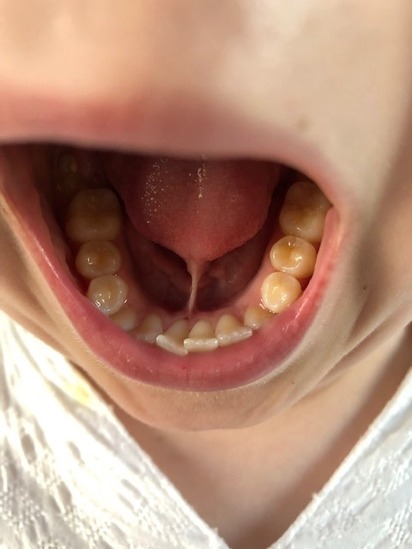
Of the four pictures shown below, only photo #1 is considered “normal with full range of motion and mobility”. Even though the lingual frenum is very pronounced, this doesn’t mean anything. Tongue ties are not identified based on appearance but rather based on function. The other three photos show varying degrees of tongue tie.
Signs you might have a tongue tie
- Difficulty Breastfeeding: Infants with a tongue tie may have trouble latching onto the breast, leading to pain and frustration for both the baby and mother.
- Speech Difficulties: Tongue tie can affect speech development in children and adults, leading to issues with pronunciation and articulation.
- Oral Hygiene Challenges: Difficulty cleaning the mouth and teeth thoroughly due to limited tongue movement can lead to oral health problems.
- Difficulty Eating: Children with tongue ties might struggle with transitioning to solid foods or experience discomfort when eating. Adults with tongue tie may find that chewing is a lot of work or that certain textures bothers them.
- Orthodontic Problems: In many cases, tongue ties can contribute to orthodontic issues, such as gaps between teeth, misaligned teeth or improper jaw development.
- Poor Sleep: When the tongue can’t comfortably rest against the roof of the mouth it often ends up relaxing into the throat causing obstructions and sleep disturbances.
- Posture Concerns: A tongue tie is a connective tissue problem that affects from the tip of the head to the bottom of the feet. A tongue tie rolls the shoulders forward and compresses the diaphragm. It’s like wearing a size small when you need a size large.
- Upper Body Tension & TMJ Pain: When the orofacial muscles are used incorrectly, lots of pain and tension results. When there is a tongue tie present, usually the tongue posture is low which destabilizes the TMJ causing pain.
Recognize a few of these? The only way to know for sure is a comprehensive exam — not a ‘stick out your tongue’ check. Book your exam today!
Tongue Tie surgery age limit
Why a Comprehensive Exam Matters More Than a Quick Look
- Most important – do not have a frenectomy without proper pre-procedure myofunctional therapy.
- Get a good night sleep the night before. This makes the experience less overwhelming when you don’t feel like a toddler who needs a nap!
- Eat a good meal before you go. I have had clients “feel a bit woozy” from the local anesthetic and it’s normally because they didn’t eat before the appointment. A good quality meal will make a big difference for you!
- Hydrate! Hydrate! Hydrate! Your body needs adequate hydration to heal, so provide your body with all the tools it needs.
What to Expect After a Tongue Tie Release: A Recovery Timeline
- Day 1–2: Mild soreness and swelling are normal. Your provider will walk you through pain relief options.
- Week 1: Wound care and stretching exercises begin — critical for preventing reattachment.
- Weeks 2–6: This is where myofunctional therapy does its real work — retraining the tongue and mouth to actually use the new range of motion.
- Ongoing: For infants, feeding often improves quickly, though mom and baby may both need a short adjustment period. A lactation consultant can help here.
Does a tongue-tie release hurt?
The Part Surgery Alone Doesn’t Fix
The release changes the tissue. It doesn’t undo years of the tongue resting in the wrong place, the jaw compensating, or the airway adjusting around the restriction. That retraining is myofunctional therapy — and it matters both before surgery (to prepare the mouth) and after (to make the release actually last).
This is the piece that gets left out of most frenectomy conversations. It’s also the difference between a release that holds and one that quietly reverts.
Ready to find out what’s actually going on? Book your exam here.
Frequently Asked Questions
Do I need therapy before a tongue tie release, or just after?
Both matter. Pre-release therapy prepares the mouth; post-release therapy is what makes the change stick. At Impact Myofunctional Therapy, we only do complete rehabilitation — we don’t offer piecemeal or one-off therapy. Releasing the tongue doesn’t solve the function issue on its own. You have to teach the muscles how to work correctly with the new range of movement.
How do I know if I actually have a tongue tie?
A quick visual check isn’t enough — function matters more than appearance. A comprehensive exam looks at how the tongue moves, not just what it looks like. A “stick your tongue out” test only checks one movement — protrusion. The most important movement of the tongue is elevation, and that’s what most quick checks miss entirely.
Is there an age limit for a frenectomy?
No strict limit. Timing depends on the individual — for infants it’s often feeding-driven; for older kids and adults, it depends on function and readiness for the exercises that follow. It’s also important that a child be old enough to comprehend, comply, and cooperate with therapy. Without that readiness, the results can fall short and the procedure may need to be redone.
Does insurance cover a tongue tie release or myofunctional therapy?
We don’t bill insurance directly, but many clients use HSA/FSA funds, and a superbill is available on request for you to submit for potential reimbursement.
What happens at the myofunctional exam?
A 60-minute virtual assessment with Carmen — full functional evaluation, not a quick look. You’ll leave with a clear picture of what’s going on and a recommended next step.


Meet Carmen Ball
I started as a dental hygienist. What changed everything was my own granddaughter — she was passed between doctors and therapists for years over her speech, breathing, sleep, and feeding issues, and no one connected the dots until I did: a significant tongue-tie, missed the whole time.
That’s the moment this stopped being a job and became the mission. Almost a decade ago, I left clinical hygiene to build Impact Myofunctional Therapy, and today I see clients all over the world — fully virtual, from wherever they are.
I’m an airway provider for the Foundation of Airway Health, where I work diligently for the recognition, diagnosis, and treatment of airway-related disorders.
And last but not least, I’m a proud member of several professional associations that afford me the opportunity to learn so that I can help you. My professional memberships include: